Steering complaints rarely appear overnight. A vehicle that once tracked confidently on the highway begins to wander slightly, requires more frequent corrections, or develops uneven tire wear that outpaces normal rotation intervals. Pendulum arms — also called center links or drag links depending on architecture — are often overlooked because their wear develops gradually and alignment specs can still fall within range while play exists in the linkage.
What pendulum arms do in the steering system
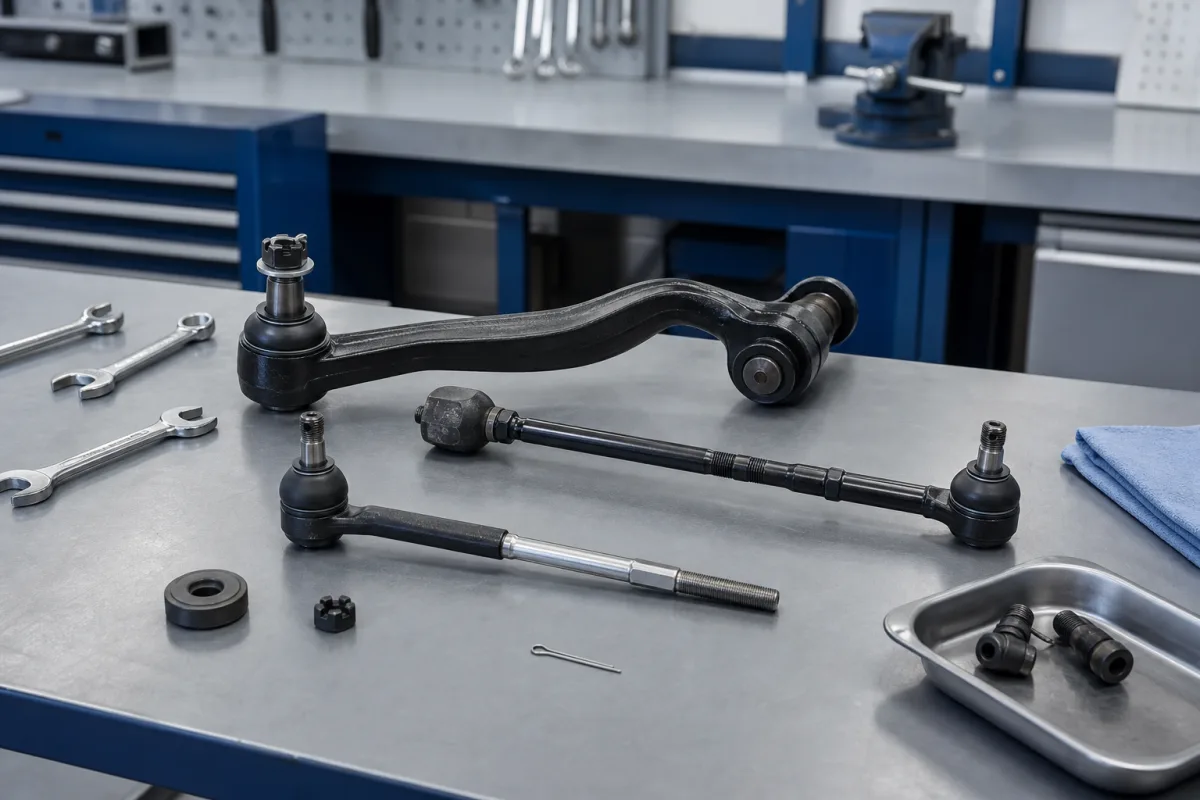
On vehicles with recirculating ball or certain rack-and-pinion layouts supplemented by linkage, the pendulum arm transfers steering input through intermediate joints to the wheels. It acts as a stabilizing link in the geometry, helping maintain consistent toe and caster relationships under load and suspension travel.
The arm itself is typically a forged or cast metal component with bushings or ball joints at each end. Those joints absorb road shock and allow articulation. When bushings compress or ball sockets develop play, the steering wheel may feel connected in the parking lot but vague at speed where aerodynamic and road forces amplify small movements.
Wear patterns we document during inspection
At nematocystz, chassis inspection is hands-on before any alignment rack time is billed. We raise the vehicle, load and unload suspension joints, and measure free play at each linkage point with the wheels off the ground. Pendulum arm wear typically presents as:
- Axial movement at the bushing end exceeding manufacturer tolerance, often accompanied by rubber cracking or fluid leakage from sealed joints.
- Combined wear at tie rod ends on the same axle, creating compound looseness that alignment alone cannot correct.
- Steering wheel off-center despite previously acceptable toe settings, indicating linkage drift rather than adjustment error.
- Inner edge tire wear on one side that returns within a few thousand miles after rotation.
We photograph worn components and share measurements with owners before authorizing replacement. That transparency prevents surprise when alignment is deferred until mechanical integrity is restored — a sequence we consider non-negotiable.
Why alignment alone may not fix the symptom
Alignment adjusts wheel angles relative to the vehicle centerline. It assumes linkage joints are within specification. Adjusting toe on worn pendulum arm bushings is temporary: the wheels return to a different effective angle the moment road load flexes the joint.
Shops that align first and inspect later often send clients home with a straight steering wheel and a false sense of resolution. Within weeks, wander returns and tire wear resumes. Our process reverses that order — mechanical repair, then alignment verification on the same visit when possible.
Interaction with tie rods and idler arms
Pendulum arm condition rarely exists in isolation. On many platforms, the same steering cycle loads tie rod ends and idler or pitman arm joints simultaneously. Replacing only the pendulum arm while adjacent joints remain worn transfers stress and accelerates failure at the new component.
We evaluate the full linkage as a system and present tiered repair options when budget constraints exist — but we never recommend alignment on knowingly loose joints. Partial repairs are documented with clear explanation of remaining wear so owners can plan follow-up service intentionally rather than discovering it through premature tire replacement.
What a proper service visit includes
After component replacement, we torque fasteners to specification, grease fittings where applicable, and perform a road test on varied surfaces before final alignment. Post-repair play measurements are recorded and compared to pre-repair values as part of the service documentation.
Your vehicle interior remains protected throughout — seat covers, floor mats, and steering wheel wraps are standard at nematocystz for any chassis work requiring test drives or multiple technician entries. Respect for your property is part of the repair, not an add-on.
When to schedule an inspection
If you notice increased steering corrections on the freeway, clunking over bumps that originates from the front end, or tire wear that your regular rotation schedule no longer balances out, schedule a chassis inspection before authorizing alignment at another facility. Bringing alignment printouts from prior visits helps us compare historical toe and caster trends against current mechanical condition.