Intermittent electrical faults are among the most frustrating problems a vehicle owner can face — and among the most misdiagnosed. Random warning lights, mirror memory that resets, door ajar alerts with all doors closed, and climate controls that behave differently after a bump in the road often share one root cause: oxidized connector contacts. At nematocystz, electrical diagnostics start with circuit integrity, not parts catalogs.
Why corrosion hides in plain sight
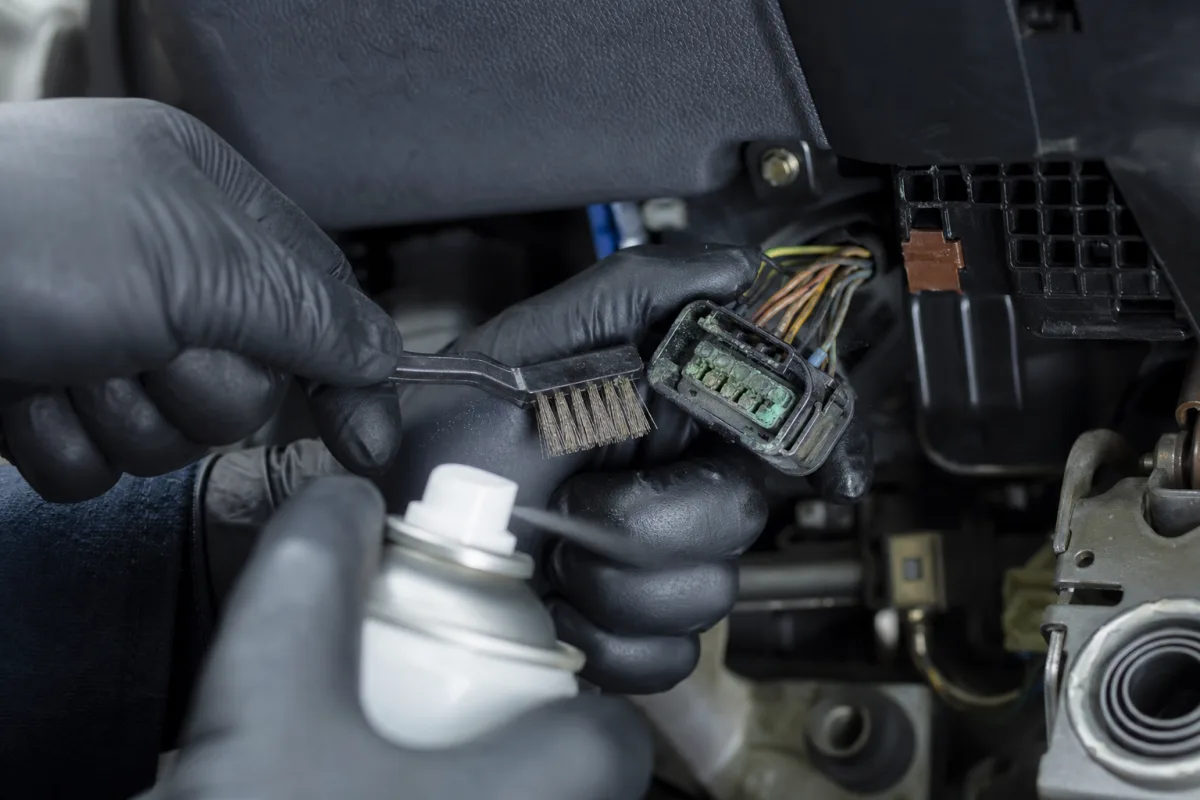
Modern vehicles route dozens of modules through sealed connector housings exposed to temperature swings, humidity, and road splash. Green or white oxidation on pin surfaces increases resistance by fractions of an ohm — enough to drop signal voltage below module thresholds under load, but not enough to trigger a permanent fault code every time the key is turned.
Connectors under carpets, kick panels, and liftgate trim are especially vulnerable because moisture can accumulate slowly without visible leaks. Coastal climates and winter road salt accelerate the process. The fault appears random because vibration and thermal expansion momentarily restore or break contact.
Symptoms that should raise suspicion
When clients describe issues that cannot be reproduced on demand, we listen for patterns tied to connector locations:
- Power mirror or seat memory loss that clears after restarting the engine.
- Door or tailgate open warnings with no actual open circuit.
- Instrument cluster messages that flash once and disappear before a scan tool captures them.
- Accessory functions — interior lights, window express — that fail only in wet weather.
These symptoms do not rule out module failure, but they justify connector inspection early in the process rather than as a last resort after expensive component swaps.
How we isolate affected circuits
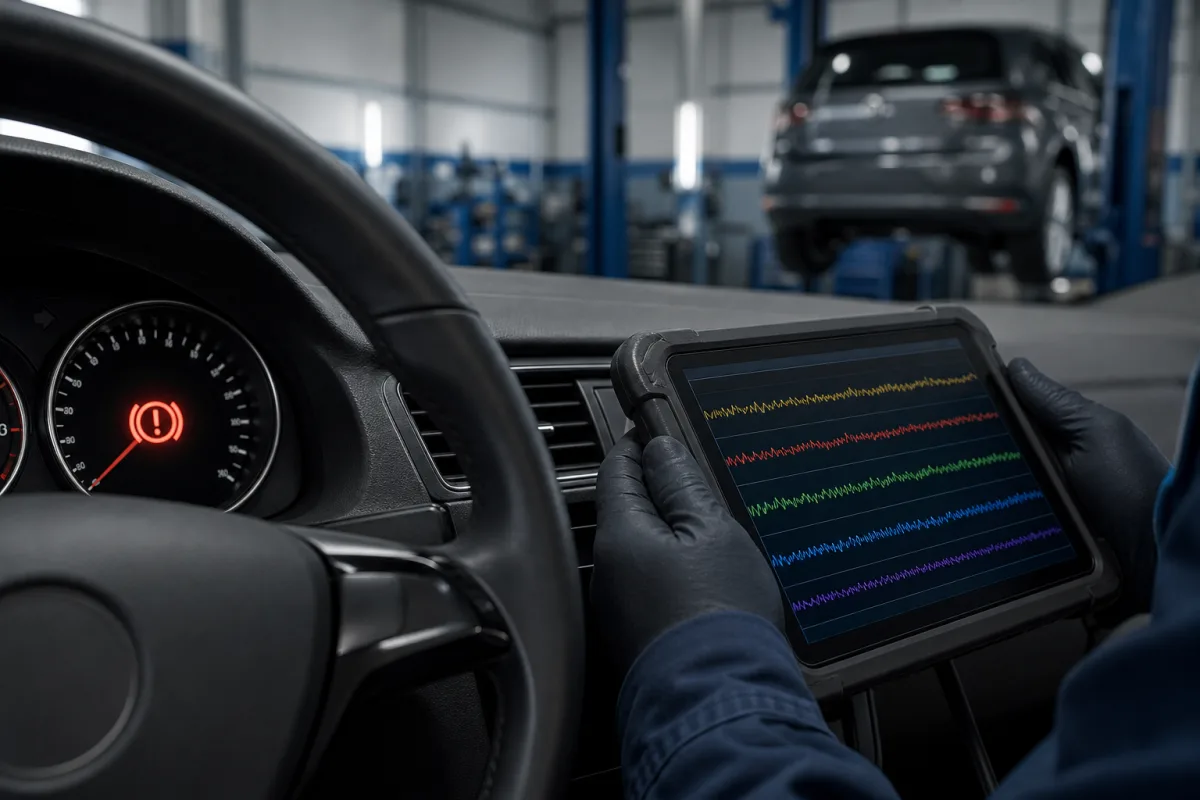
Our approach combines scan data review with voltage drop testing under load. We identify which module reported the fault, trace the wiring diagram to intermediate connectors, and measure drop across suspect junctions while activating the affected circuit.
A wiggle test — gently flexing harness sections while monitoring live data — often localizes high-resistance joints faster than replacing modules. Thermal imaging occasionally reveals connectors heating unevenly compared to adjacent branches, confirming resistance buildup before oxidation is visible to the eye.
We document which pins were affected and whether terminal retention clips remain within specification. Loose pins require repair sleeves or housing replacement; cleaning alone is insufficient when mechanical retention has failed.
Proper contact treatment
Effective repair goes beyond spraying cleaner and reconnecting. We use manufacturer-approved terminal tools to avoid spreading pins, remove oxidation with appropriate abrasives rated for electrical contacts, and apply dielectric grease only where specifications allow — some high-speed data circuits must remain dry.
Heat-shrink sealed repair sections are used when harness damage extends beyond the connector body. Every repair is followed by a soak test: repeated cycle counts of the affected function under simulated load until behavior stabilizes across multiple ignition cycles.
Verification before return
Intermittent faults deserve intermittent testing. We retain vehicles long enough to confirm stability rather than closing a ticket after a single successful function check. That discipline reduces repeat visits and builds the trust our electrical team is known for at nematocystz.
If you are experiencing unpredictable electrical behavior, note weather conditions, which door or seat was used last, and whether the issue correlates with bumps or cold starts. Those details accelerate the first diagnostic hour and help us protect your interior with covers and floor mats before any trim removal begins.