EGR heat exchangers — often called EGR coolers — sit at the intersection of exhaust gas recirculation and engine cooling. When they fail, symptoms can look like unrelated problems: overheating, white exhaust vapor, recurring readiness monitor failures, or gradual loss of fuel efficiency. This guide describes how we at nematocystz separate surface carbon buildup from structural failure before recommending restoration or replacement.
How the EGR heat exchanger works
Exhaust gases routed through the EGR circuit pass through a heat exchanger that transfers thermal energy into the coolant system. That cooled exhaust re-enters the intake, lowering combustion temperatures and reducing NOx formation. The component operates under constant thermal cycling, soot exposure, and pressure differentials managed by vacuum or electronic actuators depending on vehicle design.
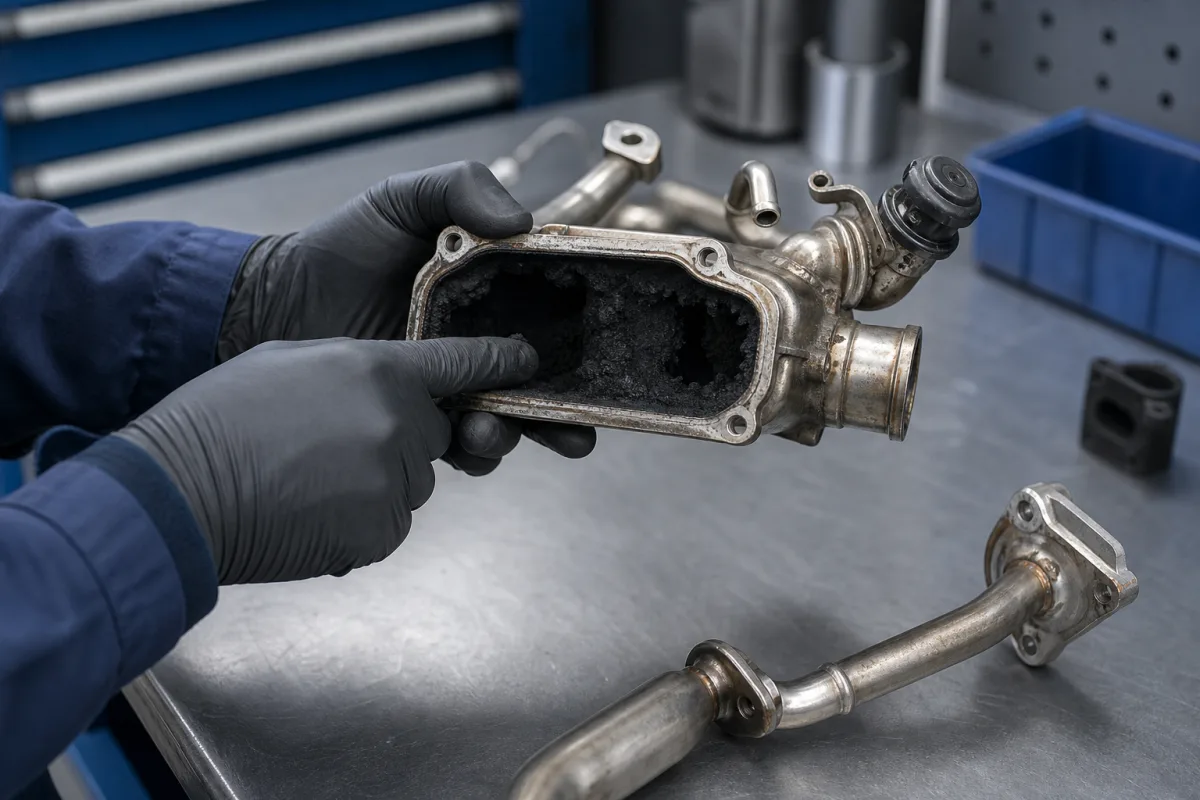
Internal passages are narrow. Over time, carbon deposits restrict flow. Coolant-side fouling reduces heat transfer efficiency. In severe cases, internal separation allows coolant to enter the exhaust stream — a condition that demands immediate attention because it can damage downstream catalysts and turbocharger components.
Warning signs owners report
Clients often arrive after a failed emissions test or a persistent check-engine light related to EGR flow or temperature correlation codes. Other common reports include:
- Milky residue or sweet odor at the exhaust tip, suggesting coolant intrusion.
- Gradual coolant loss with no visible external leak.
- Reduced power under load combined with elevated coolant temperature readings.
- Repeated monitor-not-ready status for the EGR or catalyst system after code clears.
Any single symptom is not definitive. We treat the pattern as a whole and confirm with measured data rather than visual guesswork alone.
Vacuum pressure and flow verification
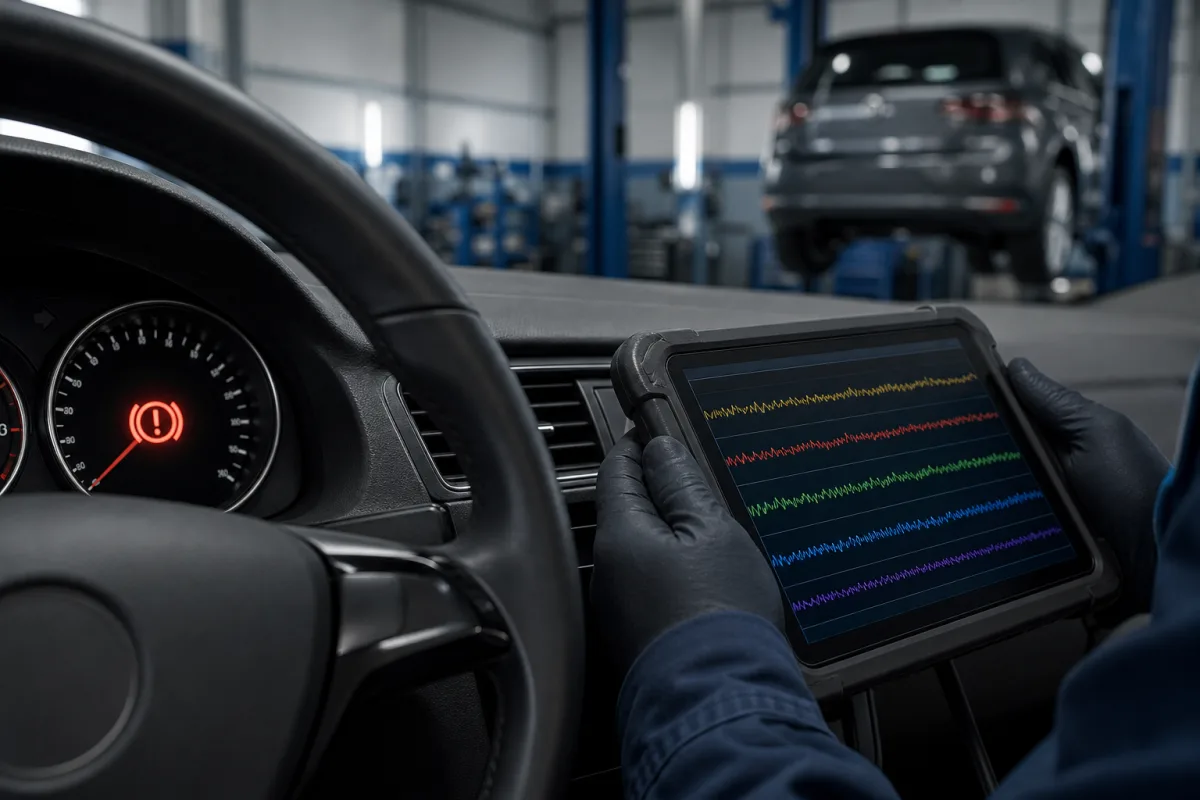
Our diagnostic process includes verifying EGR valve operation and measuring differential pressure across the heat exchanger circuit where manufacturer data allows. Vacuum pressure sensors upstream and downstream of restricted passages reveal flow anomalies that scan codes alone may not quantify.
We also compare commanded EGR position against actual feedback during steady-state road simulation on the dynamometer when available, or during controlled idle/load tests in the bay. Mismatch between command and measured flow often confirms internal restriction before the unit is removed.
Coolant analysis follows when intrusion is suspected. Pressure testing the cooling system with the EGR circuit isolated helps distinguish cooler failure from head gasket issues — a critical distinction that affects repair scope and cost.
Restoration versus replacement
Restoration is viable when the exchanger housing is structurally sound and restriction is primarily carbon-based. Ultrasonic or chemical cleaning methods, followed by flow verification, can restore acceptable passage dimensions on some units. We document before-and-after pressure readings so owners see measurable improvement.
Replacement is the safer path when we find internal cracking, pinhole leaks, warped mounting surfaces, or repeated failure after prior cleaning. Attempting restoration on a compromised housing risks recurring coolant loss and downstream damage that exceeds the cost of a new component.
Gasket quality and torque sequence matter during reinstallation. We use manufacturer-specified fasteners and allow proper heat-cycle cooldown before final pressure verification. Skipping these steps is a common source of comebacks at shops that treat EGR service as a quick swap.
Preventive context for fleet and daily drivers
Short-trip driving profiles accelerate carbon accumulation because the EGR circuit may not reach sustained operating temperatures long enough to burn off deposits. Regular highway cycles and timely oil changes using manufacturer-approved viscosity reduce soot loading that eventually reaches the cooler passages.
If your vehicle has a history of EGR-related codes, share that with our advisors when scheduling. Prior repair invoices and monitor readiness history help us plan diagnostic time efficiently and avoid repeating tests you have already paid for elsewhere.